

Managing a high-performance ATM network in Orlando, FL requires more than just a steel box and a power outlet; it demands a surgical understanding of liquidity and logistical timing. Whether you are a business owner looking to optimize floor space or a vault manager plotting refill routes, the question of capacity is the pivot point of your entire ROI. Operating a machine that sits empty is a liability, but overstuffing a low-traffic unit creates an unnecessary security profile and ties up capital that should be working elsewhere.
Key Takeaways
- Standard Capacity: Most retail-grade ATMs are staged to hold between $10,000 and $20,000 to balance risk and accessibility.
- Cassette Configuration: High-capacity “Level 1” vaults can house up to four cassettes, potentially holding $100,000+ in $20 denominations.
- Replenishment Cycles: Machines in high-traffic Orlando, FL corridors often require bi-weekly or even daily “swaps” to prevent downtime.
- Capital Efficiency: Professional management via Atlantic Processing ensures you aren’t “dead-loading” cash that isn’t earning transaction fees.
How much money can an atm machine hold in a standard retail setting?
Most independent retail ATMs typically house between $10,000 and $20,000, distributed across one or two cash cassettes. While the physical hardware can often accommodate much more, operators limit the “load” to mitigate the financial impact of theft and to keep insurance premiums manageable. In the fast-paced Orlando, FL market, striking this balance is the difference between a profitable site and a high-risk liability.
What factors dictate the specific cash capacity of an ATM?
The primary drivers of ATM capacity include the physical number of cassettes, the denomination of the bills used, and the localized withdrawal velocity. A single-cassette machine loaded with $20 bills has a much lower ceiling than a multi-cassette bank unit dispensing $50s and $100s. Furthermore, the how much money can an atm machine hold calculation must account for the physical thickness and “fitness” of the currency being loaded.
Operational Strategy
- Cassette Quantity: Retail units usually feature 1,000 to 2,000 note capacities per cassette.
- Denomination Mix: Loading $20s is standard, but high-limit environments may integrate $50s to extend the “time-to-empty” metric.
- Hardware Grade: UL 291 Business Hours safes are built for light retail, whereas Level 1 vaults are designed for high-exposure environments.
ROI Metrics
- Transaction Velocity: Analyzing the “burn rate” of cash ensures the machine never hits a “Zero-State” during peak tourist seasons.
- Surcharge Revenue: Maintaining optimal cash levels directly correlates to capturing every possible $3.00 to $5.00 transaction fee.
- Capital Float: Smart operators use Atlantic Processing data to ensure they aren’t “parking” $50k in a machine that only moves $5k a week.
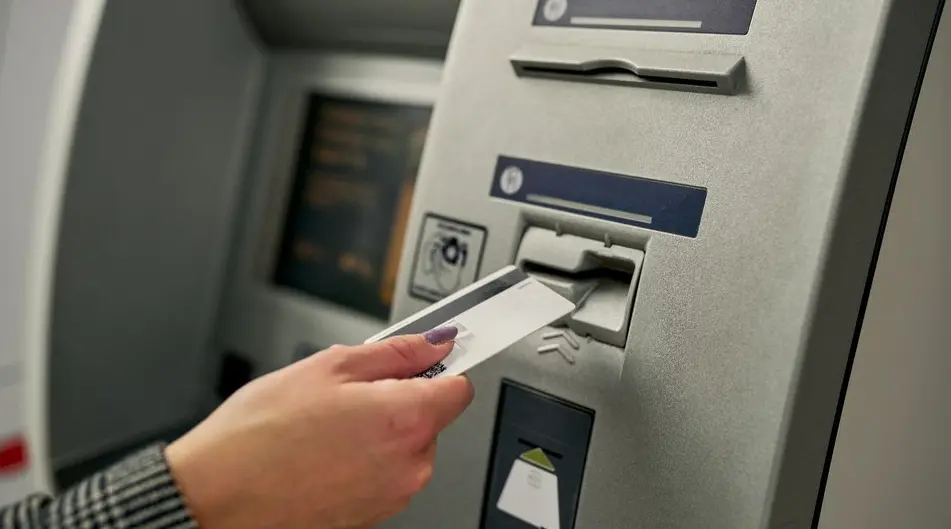
Comparison: Retail vs. Financial Institution ATMs
Feature | Retail ATM (Gas Station/Bar) | Financial Institution (Bank/Drive-Thru) |
Typical Cash Load | $10,000 – $30,000 | $50,000 – $200,000+ |
Cassette Count | 1 – 2 Cassettes | 4 – 6 Cassettes |
Refill Frequency | Weekly / On-Demand | Daily / Scheduled Armored |
Security Rating | UL 291 Business Hours | UL 291 Level 1 |
How do location and demand influence the “burn rate” of cash?
In a high-density area like Orlando, FL, demand is dictated by “foot-traffic anchors” such as theme parks, late-night venues, and transit hubs. A machine located near a cash-only establishment will exhaust its supply three times faster than a standard convenience store unit. This necessitates a strategic increase in the load or a more aggressive replenishment schedule to maintain the machine’s reputation for reliability.
Technical Execution
- Proximity Mapping: Position ATMs near high-friction payment areas where “cash is king” to maximize withdrawal frequency.
- Event-Based Loading: Anticipating local festivals or sports games allows for “top-loading” the vault before the surge hits.
- Low-Cash Alerts: Utilizing real-time monitoring through Atlantic Processing prevents the dreaded “Out of Service” screen.
What role does security play in determining cash levels?
Security is the ultimate governor of ATM capacity; the more cash you load, the higher the “theft-attraction” score of the location. Operators must weigh the convenience of fewer refills against the risk of a “hook and chain” attack or internal compromise. Implementing armored car services for how much money can an atm machine hold logistics adds a layer of professional protection that allows for higher capacity loads without increasing the owner’s personal risk.
Master Craftsman Entity Definitions
- Cassette Mapping: The software-driven process of telling the ATM exactly which denominations are in which physical drawer.
- Vault Settlement: The daily reconciliation of cash dispensed versus the starting balance to ensure 100% accounting accuracy.
- Currency Fitness: The physical quality of the bills; “limp” or torn cash leads to bill-jams that shut down high-capacity machines.
- Interchange Fee: The small payment the card-issuing bank pays to the ATM owner for facilitating the transaction.
Expert Perspective: The “Dead Cash” Trap
Many novice operators believe that filling a machine to its $80,000 maximum is a “set it and forget it” win. In reality, that is $80,000 of non-productive capital. At Atlantic Processing, we teach “Just-in-Time” cash logistics. If your machine only pulls $15k between service visits, loading $60k is just giving the bank a free loan of your money while increasing your insurance risk. Load for the cycle, not the capacity.
Mastering the Future of ATM Liquidity
Optimizing your cash management strategy requires a blend of real-time data and physical security. By understanding exactly how much money can an atm machine hold—and more importantly, how much it should hold—you can maximize your uptime and minimize your capital risk. In the Orlando, FL market, the most successful operators are those who view their cash load as a moving target, adjusted by seasonality, traffic patterns, and technical monitoring.
Ready to optimize your cash flow and machine performance? Contact Atlantic Processing at (727) 325-5540 to schedule a complete service audit today.

Frequently Asked Questions
How much money can an atm machine hold in a typical small business?
Most small business ATMs are loaded with $10,000 to $20,000. This amount is usually sufficient to cover a week of transactions without exposing the owner to excessive insurance liability or theft risk.
What is the maximum physical capacity of a high-end ATM?
A high-end, four-cassette ATM can physically hold up to 8,000 notes. If loaded entirely with $20 bills, the capacity is $160,000, though retail locations rarely ever reach this level due to security concerns.
How does denomination choice affect the total cash an ATM can hold?
The total value is a direct product of the denomination; loading a 2,000-note cassette with $10s results in $20,000, whereas loading it with $20s results in $40,000. Operators often mix denominations to provide customer choice while extending the machine’s uptime.
Is it dangerous to keep a machine at its maximum capacity?
Higher cash volumes increase the “bounty” for physical attacks. Most professional operators in Orlando, FL use armored transport and real-time monitoring to mitigate the risks associated with high-capacity cash loads.
How do I know if my ATM needs a higher cash load?
If your machine frequently sends “Low Cash” or “Out of Currency” alerts before your scheduled refill date, it is time to reassess your how much money can an atm machine hold strategy. Increasing the load or the frequency of service is essential to prevent losing surcharge revenue.